Category: sport

Key learnings and teachings from the sporting world

  • The philosophy of Shane Lowry

    The philosophy of Shane Lowry

    2019 Open Champion, and one of the PGA Tours’ strongest golfers Shane Lowry joined Dylan Dethier of Golf.com to discuss his warm up routine.

    In doing so, the Irishman gave away some key tips not only into how he became the golfer he is today, but also into his simplistic philosophy which undoubtedly helps him on the golf course and in life.

    As Shane took us through what’s in his golf bag, he talks through his mental golf game and shares some of his outputs on life, around simplicity, the importance of clear thinking and enjoying the simple things.

    Watch the full video here.

    Things we learned from Shane Lowry

    Simplicity is key

    Being a professional golfer, enjoying the spoils that come with that, undoubtedly has an impact on your life. As win many high earning athletes, money can change things and completely shift your life output.

    One of the most inspiring things from Shane Lowry, was the simplicity he still lives by in his day to day life. When asked about his enjoyment of partying, Shane essentially sums up his enjoyment of simplicity by saying: “If I have a coffee in the morning, and a diet coke in the evening, I am a happy man.”

    This is a really important message to anyone who thinks money buys happiness, Shane is very humble, and expresses that it really is life’s simple pleasures that make you happy.

    Make good from the bad

    Lowry spoke about how good some other golfers are at neutralising bad shots, how some of their miss hits are still so good, and how you need to make your bad days the best they can be if you want any chance to succeed.

    Lowry says: “Your good days will always be good, you need to make your bad days as good as they can be.”

    Shane is being very literal about golf when he says this, but this is a great philosophy to apply to life. In life you are going to have your good and your bad days, you need to make sure your bad days are as good as possible to remain level, not get too low and keep pushing forward.

    It’s easy to say and hard to do, but if you can still find the positives on bad days, then that is a huge step to reducing the number of bad days, a huge skill and all part of building resilience and understanding.

    Sometimes the things that are good for us are the best

    Lowry went into detail about the PGA Tour, and how during his season he has his favourite weeks. One of his favourite weeks is in the build up to The Masters. He says this is because he is at home, practicing hard, going to bed early and focusing on himself.

    Going to bed early and practicing hard are two very simple, healthy things for a golfer to do, and taking pride in doing those things is one of the reasons Lowry is the player he is.

    Often as humans with busy lives, we don’t want to do the ‘boring’ things like train, practice, go to bed early, focus on ourselves, but actually these things are essential for success. We should not see them as boring but embrace them.


  • Championship atmosphere says it all: Things we learned from Sheffield United v Leeds

    Championship atmosphere says it all: Things we learned from Sheffield United v Leeds

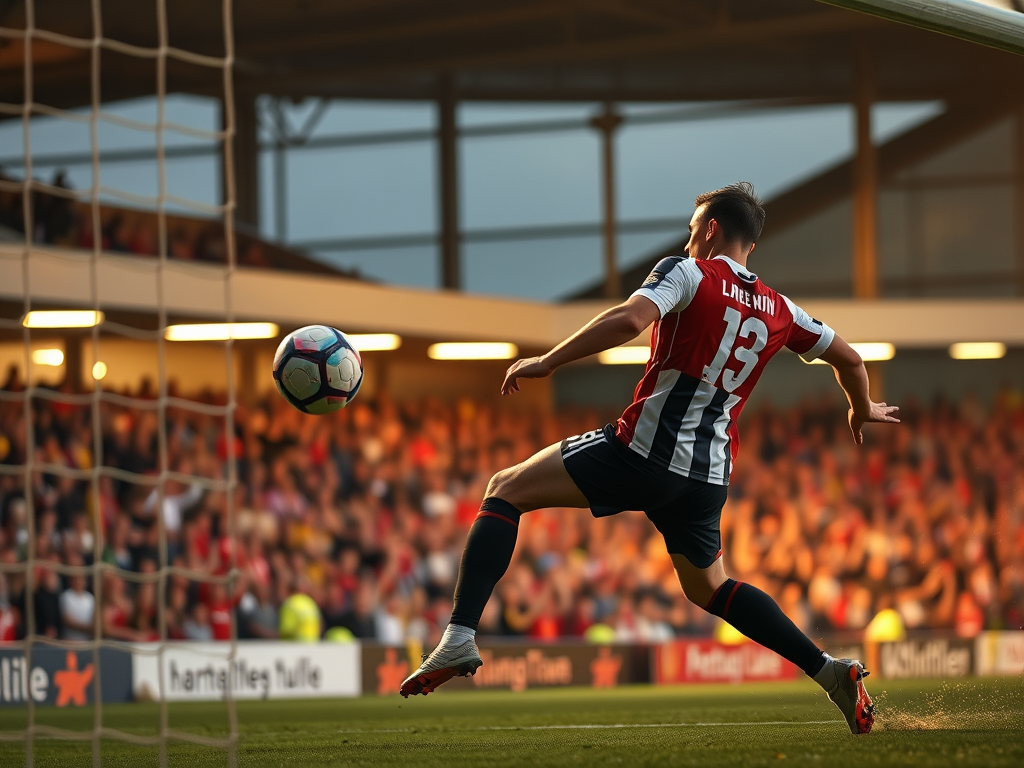
    We knew Sheffield United V Leeds was going to be a great game, whatever the result. Two top of the table sides going at it at a packed Brammall Lane.

    For me it immediately highlighted what an institution the Championship really is. If this was a Premier League fixture, it would not be the same. It probably wouldn’t be on television, which may be good may be bad, but it really felt to me like it being a top of the table Championship clash made all the difference.

    Two northern powerhouses put on a great display.

    We are in a really dangerous time for football at the moment, it looks like the teams at the top of the Premier League are becoming more and more separated from those below them, a lot of the league looks stale and plays stale.

    sport

    The results game has taken over and there is no room for the creative individual anymore. We might be at the beginning of the end for the Premier League and we aren’t aware, but the academy robot has crept into football, taking away from the individual brilliance and flair that made it the game we love. That is not to take away from any current players or up and coming academy players, they are a product of the environment that has been made for them.

    We of course still get to see fantastic football and fantastic players, but the passing round the back and American Football style game management and control and data focus for me has meant we see less and less top games of football each season.

    Enter the Championship, we get the top class around the back football, with an extra bit of edge. The edge is what provides the value. If you regularly attend matches, you spend an absolute fortune, and value is what you deserve. There is no better value than some of the football we see in the Championship. Even further down the pyramid, where more is on the line for the players each week as performances mean new contracts which means survival as a lower level footballer.

    I do fear that we are seeing the end of Premier League football as we know it. It’s right in front of us and we can’t stop it. It is highlighted further by the excellent offering in the Championship. 15 Years ago 8/10 games in the Premier League were like that Championship fixture. Now you are lucky if there is one free flowing, end to end attacking fixture a week. Records and stats and xG might be better for it, but the eyes of the spectator are getting a watered down product week in week out, with only a few exceptions.

  • Things we learned from a dramatic League Two comeback

    Things we learned from a dramatic League Two comeback

    What We Can Learn from Successful Professional Footballers

    After watching Cheltenham Town’s dramatic 2-2 draw with Walsall—where they scored two goals deep into stoppage time—I started thinking about what it really takes to succeed as a professional footballer in League One and League Two.

    Technical ability is important, but that alone isn’t enough. The lower leagues demand more—traits that separate those who survive from those who fade away. Cheltenham’s determination in that game was a perfect example of why certain players thrive at this level.

    Here are two key attributes that can make all the difference.

    Max Effort, Max Reward


    One of the biggest factors in lower-league football is work rate. The schedule is relentless, with players often playing twice a week. Unlike Premier League stars, they don’t have access to state-of-the-art recovery facilities or world-class sports science teams to help them bounce back. But the expectation remains the same—give 100% every time you step onto the pitch.

    For clubs like Cheltenham, fans are the lifeblood of the team. They spend their hard-earned money to watch and support their local club, contributing directly to players’ wages. If a player gives their all—chasing every ball, pressing non-stop, fighting until the final whistle—fans will appreciate it.

    At this level, attitude is everything. Determination and resilience can take you just as far as talent.

    Adapt to Survive


    League One and Two football is a world away from academy setups, where players are often taught a specific way of playing. In the lower leagues, if you’re too rigid in your approach, you could find yourself struggling.

    Managers change, formations shift, and different tactical demands come into play. The more adaptable you are, the more valuable you become.

    Take Cheltenham as an example. Over the years, I’ve seen players thrive by adjusting to new roles. One season, the team switched from a 4-4-2 to a 3-5-2. One central midfielder dropped into a centre-back role and eventually became club captain, leading the team to promotion. Another midfielder transitioned to right wing-back and earned a move to a higher division.

    On the other hand, I’ve also seen players resist change—strikers unwilling to play on the wing, attacking midfielders reluctant to take on a deeper role. More often than not, those players end up moving on, struggling to find stability.

    Of course, every player has their preferred position, but if you want to build a long career in the lower leagues, you need to be adaptable. Do what the manager asks, embrace new challenges, and give yourself the best chance to succeed.

    Final Thoughts


    Talent gets you noticed, but attitude, effort, and adaptability keep you in the game. Whether you’re fighting for survival or pushing for promotion, these qualities make all the difference.

    If you’re willing to work hard and embrace change, you’ll have a much better chance of making it in professional football—just like the players who fought until the final whistle in Cheltenham’s incredible comeback.

  • Things we learned about Manchester United

    Things we learned about Manchester United

    As Manchester United bow out of the FA cup after defeat to Fulham, it’s time to take a look at the serious problem at Old Trafford at the moment.

    Manchester United, arguably the biggest football club in the world, with one of the most expensive squads ever assembled, and one of the most successful clubs ever, is a mess.

    Since the departure of the irreplaceable Alex Ferguson Manchester United have always looked a shadow of their former selves. What we see right now however in 2025 is crazy.

    An unthinkable scenario 15 years ago. A new Manager, still getting to grips with the league, but not performing as a Manchester United Manager is expected, and a group of players far below the quality of what it takes to be a Manchester United player.

    It says it all when the returning Jonny Evans has been the most Manchester United player this season. He is probably the only one who has shown what it means to wear the badge.

    Sport

    Photo by Fabricio Trujillo on Pexels.com

    Former players like Roy Keane have come out and questioned the standards and leadership of the squad and it doesn’t take a genius to realise that those leaders in the dressing room aren’t there.

    Bruno Fernandes, the team captain, is captain because of the example he sets on the pitch. However, his attitude week in week out looks horrible. If a decision doesn’t go his way, or a pass doesn’t come his way, the arms are up and the head drops. The tracking back becomes half hearted and it just isn’t good enough for a Manchester United captain.

    There is obviously a number of problems rooted within, away from the pitch, because you would think the leadership behind the scenes would want to pull from the wealth of experience of ex players and bring them in to help build and support the current crop of players. They have a very young squad at the moment that at times look lost.

    The attack is probably the worst Manchester United attack in the 21st century. There may be a lack of top class world strikers around at the moment, but their certainly aren’t any in the Manchester United squad.

    So much needs to change, and it begins at the top. The fire has really gone out at Manchester United and it is not an easy fix. Leadership and responsibility needs to come from above and be projected onto the pitch with better recruitment and then performances from players with the right attitude.

    The United starting line up has gone from 11 leaders, to maybe one or two, and it’s a shame to see. Such a big club could offer so much more and should be competing for league titles year in year out, but at the moment they are well off the pace.